

Big projects have a way of freezing progress before it even starts. Long task lists, vague goals, and too much to do can make productivity feel impossible, no matter how motivated someone is. The problem usually is not effort or discipline, but the size of the task itself.
Microproductivity flips that pattern by focusing on small, manageable actions instead of massive goals. By breaking work into tiny steps, momentum builds naturally, and progress feels achievable. Tasks stop feeling heavy, and getting started becomes easier.
In this article, we’ll break down how microproductivity works and why small steps can create real, lasting progress. Let’s start!
How Microproductivity Differs From Traditional Productivity
Traditional productivity advice can feel exhausting. You know the drill: block out four uninterrupted hours for deep work, tackle your biggest project first thing in the morning, and push through until you hit that major milestone. Sounds great in theory, right? But life rarely cooperates.
Traditional productivity operates on the marathon mentality. It assumes you have long stretches of focused time, minimal interruptions, and the mental stamina to power through complex tasks in one sitting. The focus is on big deliverables, lengthy work sessions, and substantial chunks of progress.
Microproductivity flips this script entirely. Instead of waiting for that perfect two-hour window, you work in quick bursts. Rather than tackling entire projects, you chip away at tiny, specific actions. Think of it this way: traditional productivity is like trying to eat a whole pizza in one sitting, while microproductivity is savoring it slice by slice throughout the day.
The beauty of this approach? It works with your actual life, not against it. Got five minutes between meetings? Perfect. Waiting for your coffee to brew? That's enough time. Microproductivity recognizes that modern work life is fragmented, and instead of fighting that reality, it embraces it.
Key Principles Of The Microproductivity Approach
At its core, microproductivity rests on a few fundamental principles that make it incredibly effective. First, every task, no matter how complex, can be broken down into micro-actions. Second, progress beats perfection every single time. And third, small-time investments compound into significant results.
The approach maintains a clear connection between your tiny tasks and your bigger goals. You're not just doing random small things: each micro-task is a deliberate step toward something larger. This intentionality is what separates productive micro-work from mere busy work.
Another crucial principle? Frequent feedback loops. When you complete micro-tasks regularly, you're constantly getting signals about what's working and what isn't. This rapid feedback helps you adjust course quickly, rather than discovering problems after hours of misdirected effort.
Breaking Down Complex Goals Into Micro Actions
Here's where the magic happens. Take any daunting project on your plate right now. Maybe it's "redesign website" or "write annual report." These feel overwhelming because they're dozens of smaller tasks masquerading as one giant beast.
The microproductivity approach says: expose the beast for what it really is. "Redesign website" becomes "sketch homepage layout" (10 minutes), "choose three color options" (5 minutes), "write hero section headline" (2 minutes). Suddenly, that insurmountable project becomes a series of totally doable micro-actions.
Each micro-action should be so specific and small that you know exactly what "done" looks like. "Research competitors" is too vague. "Find three competitor homepages and screenshot them" is perfect. The specificity eliminates decision fatigue and procrastination; you know exactly what to do, and roughly how long it'll take.
The Power Of Minimal Time Commitments
Here's a secret: your brain is terrible at estimating effort. When you think about working on something for an hour, your mind immediately conjures up all the energy that'll be required. But tell yourself you'll work for just two minutes? Your brain barely registers that as effort.
Minimal time commitments, typically between 2 and 10 minutes, bypass your psychological resistance. They're so small that your procrastination mechanisms don't even kick in. And here's the kicker: once you start, you often keep going. But even if you don't, you've still made progress.
These tiny time blocks also let you leverage previously wasted moments. Waiting for a download? Draft three bullet points. Standing in line? Review and reorganize your task list. Commuting (as a passenger)? Voice-record ideas for that presentation. Suddenly, those dead zones in your day become productive pockets.
Common Microproductivity Techniques And Methods
The microproductivity toolkit is surprisingly simple yet incredibly versatile. Task chunking sits at the heart of it all, the practice of breaking work into the smallest meaningful pieces. But that's just the beginning.
Time blocking takes on a different flavor with microproductivity. Instead of blocking hours, you're working with micro-blocks of 5, 10, or 15 minutes. These short sprints maintain laser focus because the end is always in sight. Tools like Blitzit excel here, using countdown timers and focused task lists to keep you locked in during these micro-sessions.
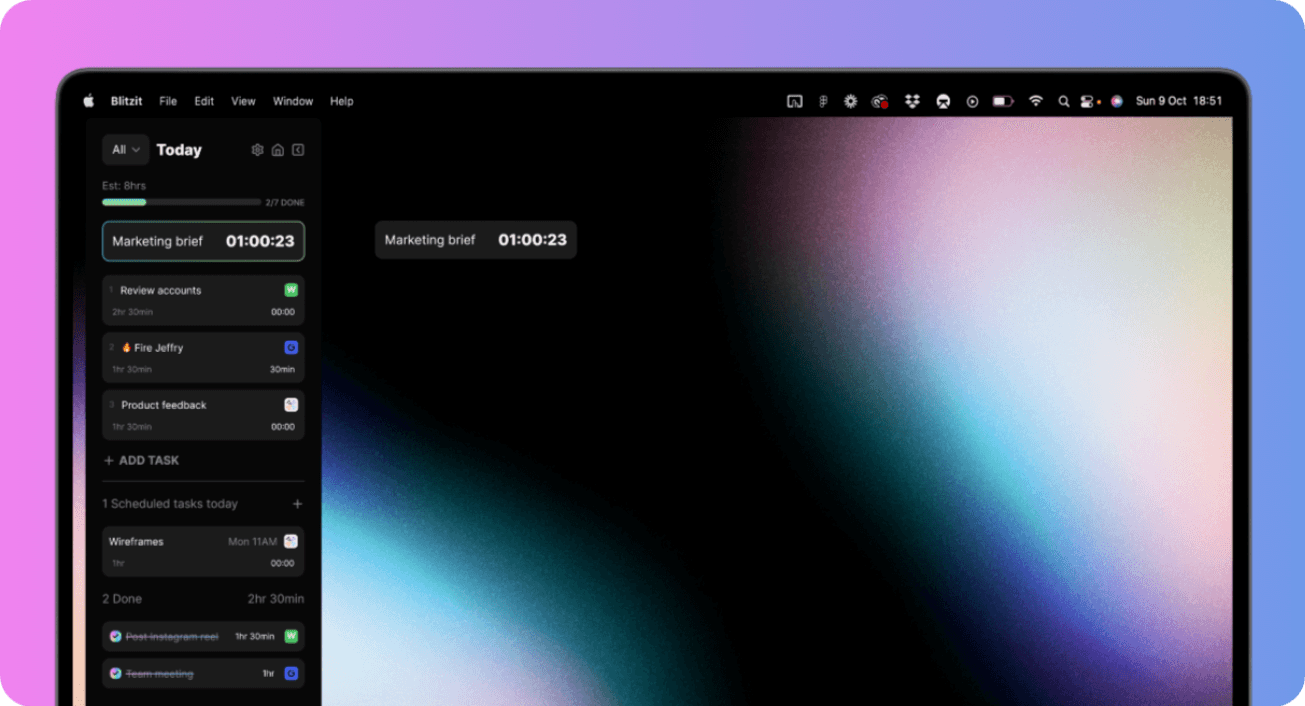
Checkpoint reviews become your new best friend. After each micro-session or handful of micro-tasks, you quickly assess: Did that work? What's next? This constant calibration keeps you aligned with your goals without the lengthy planning sessions traditional productivity demands.
The Two Minute Rule
David Allen popularized this golden rule, and it's a cornerstone of microproductivity. If something takes two minutes or less, do it immediately. No adding it to a list, no scheduling it for later, just do it now.
But there's a second application that's equally powerful. When facing a task you're avoiding, commit to just two minutes. Set a timer, work for those 120 seconds, then give yourself full permission to stop. More often than not, you'll want to continue. But even if you don't, you've broken the seal of inaction.
This rule works because two minutes is psychologically insignificant. Your brain can't mount a strong resistance to such a tiny ask. Yet two minutes is long enough to make real progress, write a paragraph, clear five emails, and organize one drawer. These micro-victories add up faster than you'd think.
Task Stacking And Micro Habits
Task stacking leverages your existing routines as launching pads for micro-productive actions. Already making coffee every morning? Stack "write today's three priorities" onto that ritual. Always check your phone after lunch? First, spend 60 seconds clearing your desk.
Micro habits work similarly but focus on building new productive behaviors through tiny, consistent actions. Want to become a better writer? Start with one sentence per day. Trying to stay on top of finances? Review one transaction daily. The key is making the habit so small that skipping it would feel silly.
These techniques work because they piggyback on established neural pathways. You're not creating entirely new routines (which is hard): you're just adding tiny extensions to what you already do automatically.
Benefits Of Adopting A Microproductivity Mindset
Microproductivity changes not just how work gets done, but how it feels on a daily basis. Instead of pushing through overwhelm, progress becomes lighter, clearer, and easier to sustain.
Reduces overwhelm and decision paralysis
Large tasks stop feeling heavy when they are broken into small, clear actions. Knowing exactly what to do next removes hesitation and makes starting less stressful.Improves focus and mental clarity
Short work sessions help maintain attention without the fatigue that comes from long stretches of effort. Regular breaks allow the brain to reset, leading to better concentration throughout the day.Creates steady motivation through frequent wins
Completing small tasks every few minutes provides a constant sense of progress. These quick wins keep motivation high instead of waiting hours to feel accomplished.Makes procrastination easier to overcome
Small, specific tasks do not trigger the same avoidance response as vague or oversized goals. Clear actions like writing a few bullet points feel manageable and easier to start.Builds confidence through repeated success
Each completed micro-task reinforces the belief that progress is possible. This growing confidence carries into larger tasks and helps maintain control over the workday.Builds momentum that lasts
Finishing one small task makes the next one easier to begin. Progress stacks naturally, creating a rhythm where work feels smoother and less forced.Supports sustainable productivity
Microproductivity avoids burnout by spreading effort across short sessions. Because the energy required is low, progress can continue even on busy, stressful, or low-energy days.
Over time, this mindset turns consistent small actions into meaningful progress without relying on pressure or burnout to get results.
Ways To Implement Microproductivity In Daily Life
Ready to put microproductivity into practice? Here are practical ways to apply microproductivity to everyday work and routines without adding extra pressure.
Break big tasks into the smallest possible steps
Start by taking one challenging task and spending five minutes listing tiny actions required to move it forward. Focus on steps that can be completed quickly, such as opening a document, writing one sentence, or pulling one data point. Smaller steps reduce resistance and make starting easier.Use dead time on purpose
Identify short pockets of time during the day, such as commuting, waiting, or transitions between activities. Match these moments with simple micro-tasks like outlining a meeting agenda, replying to a message, or organizing notes. These minutes add up without disrupting your schedule.Work with short, focused timers
Use task and timer tools that support short work bursts. A visible countdown encourages focus during micro-sprints, while organized task lists help connect small actions to larger goals. This approach improves follow-through without long work sessions.Apply the Two Minute Rule consistently
Immediately handle tasks that take two minutes or less. Over time, this prevents small tasks from piling up and frees mental space. Keeping a list of 2 to 10-minute tasks makes it easy to act when time opens up.Set three micro-wins each morning
Choose three small, achievable actions to complete before noon. These wins should be realistic but useful, such as sending an email, reviewing a document, or preparing one slide. Early progress helps maintain momentum for the rest of the day.Test different micro-sprint lengths
Experiment with short work sessions like 5, 10, 15, or even 25 minutes. Different tasks and people respond better to different time blocks. Finding the right length increases consistency and reduces burnout.Track completed micro-tasks
Record progress by checking off tasks, keeping a simple tally, or using a habit tracker. Seeing completed actions reinforces the habit and highlights how small steps create steady progress over time.
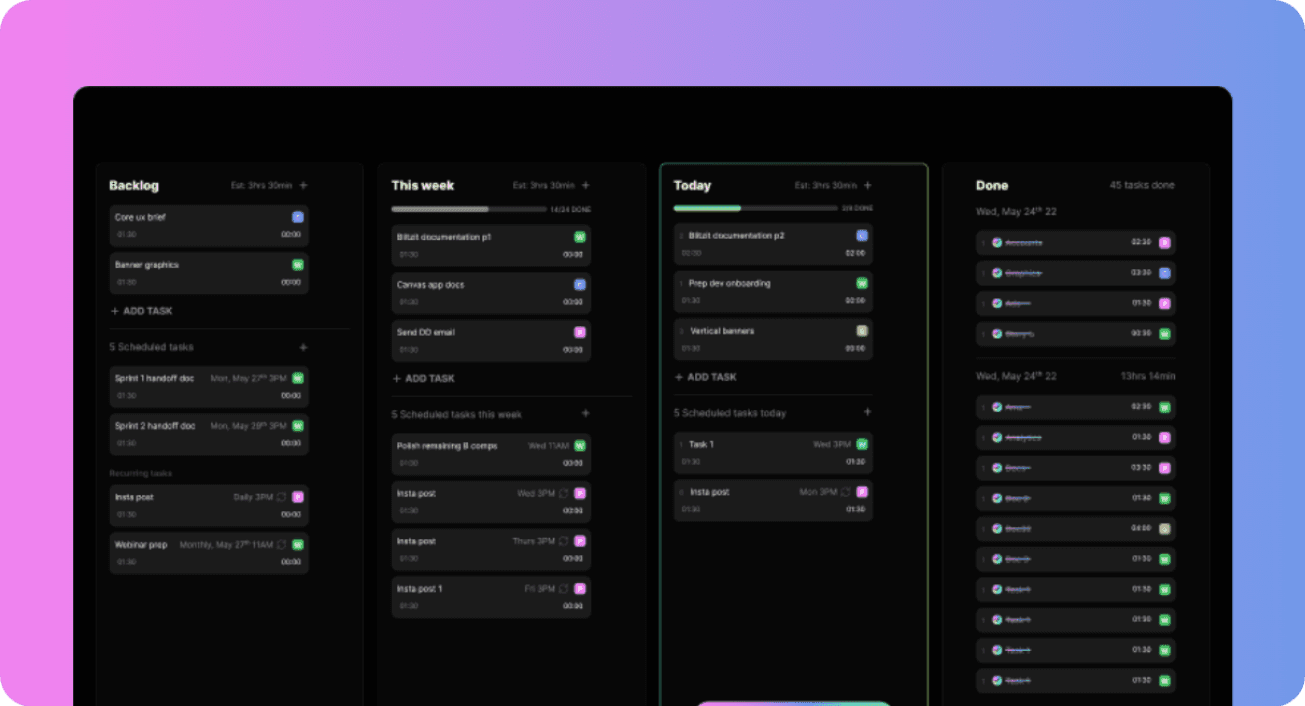
Microproductivity works best when it becomes part of daily routines. Small actions, repeated consistently, can change how work feels and how much actually gets done.
Conclusion
Microproductivity is not about thinking smaller. It is about working with how real life actually functions. Small, intentional actions help turn overwhelming goals into steady progress and make productivity easier to sustain over time.
By focusing on short, manageable steps and using tools like Blitzit to stay structured and accountable, it becomes easier to build momentum without burning out. You do not need long stretches of perfect focus to move forward. Start with one micro action, track it, and let those small wins add up. Consistent progress begins with the next doable step.

Big projects have a way of freezing progress before it even starts. Long task lists, vague goals, and too much to do can make productivity feel impossible, no matter how motivated someone is. The problem usually is not effort or discipline, but the size of the task itself.
Microproductivity flips that pattern by focusing on small, manageable actions instead of massive goals. By breaking work into tiny steps, momentum builds naturally, and progress feels achievable. Tasks stop feeling heavy, and getting started becomes easier.
In this article, we’ll break down how microproductivity works and why small steps can create real, lasting progress. Let’s start!
How Microproductivity Differs From Traditional Productivity
Traditional productivity advice can feel exhausting. You know the drill: block out four uninterrupted hours for deep work, tackle your biggest project first thing in the morning, and push through until you hit that major milestone. Sounds great in theory, right? But life rarely cooperates.
Traditional productivity operates on the marathon mentality. It assumes you have long stretches of focused time, minimal interruptions, and the mental stamina to power through complex tasks in one sitting. The focus is on big deliverables, lengthy work sessions, and substantial chunks of progress.
Microproductivity flips this script entirely. Instead of waiting for that perfect two-hour window, you work in quick bursts. Rather than tackling entire projects, you chip away at tiny, specific actions. Think of it this way: traditional productivity is like trying to eat a whole pizza in one sitting, while microproductivity is savoring it slice by slice throughout the day.
The beauty of this approach? It works with your actual life, not against it. Got five minutes between meetings? Perfect. Waiting for your coffee to brew? That's enough time. Microproductivity recognizes that modern work life is fragmented, and instead of fighting that reality, it embraces it.
Key Principles Of The Microproductivity Approach
At its core, microproductivity rests on a few fundamental principles that make it incredibly effective. First, every task, no matter how complex, can be broken down into micro-actions. Second, progress beats perfection every single time. And third, small-time investments compound into significant results.
The approach maintains a clear connection between your tiny tasks and your bigger goals. You're not just doing random small things: each micro-task is a deliberate step toward something larger. This intentionality is what separates productive micro-work from mere busy work.
Another crucial principle? Frequent feedback loops. When you complete micro-tasks regularly, you're constantly getting signals about what's working and what isn't. This rapid feedback helps you adjust course quickly, rather than discovering problems after hours of misdirected effort.
Breaking Down Complex Goals Into Micro Actions
Here's where the magic happens. Take any daunting project on your plate right now. Maybe it's "redesign website" or "write annual report." These feel overwhelming because they're dozens of smaller tasks masquerading as one giant beast.
The microproductivity approach says: expose the beast for what it really is. "Redesign website" becomes "sketch homepage layout" (10 minutes), "choose three color options" (5 minutes), "write hero section headline" (2 minutes). Suddenly, that insurmountable project becomes a series of totally doable micro-actions.
Each micro-action should be so specific and small that you know exactly what "done" looks like. "Research competitors" is too vague. "Find three competitor homepages and screenshot them" is perfect. The specificity eliminates decision fatigue and procrastination; you know exactly what to do, and roughly how long it'll take.
The Power Of Minimal Time Commitments
Here's a secret: your brain is terrible at estimating effort. When you think about working on something for an hour, your mind immediately conjures up all the energy that'll be required. But tell yourself you'll work for just two minutes? Your brain barely registers that as effort.
Minimal time commitments, typically between 2 and 10 minutes, bypass your psychological resistance. They're so small that your procrastination mechanisms don't even kick in. And here's the kicker: once you start, you often keep going. But even if you don't, you've still made progress.
These tiny time blocks also let you leverage previously wasted moments. Waiting for a download? Draft three bullet points. Standing in line? Review and reorganize your task list. Commuting (as a passenger)? Voice-record ideas for that presentation. Suddenly, those dead zones in your day become productive pockets.
Common Microproductivity Techniques And Methods
The microproductivity toolkit is surprisingly simple yet incredibly versatile. Task chunking sits at the heart of it all, the practice of breaking work into the smallest meaningful pieces. But that's just the beginning.
Time blocking takes on a different flavor with microproductivity. Instead of blocking hours, you're working with micro-blocks of 5, 10, or 15 minutes. These short sprints maintain laser focus because the end is always in sight. Tools like Blitzit excel here, using countdown timers and focused task lists to keep you locked in during these micro-sessions.

Checkpoint reviews become your new best friend. After each micro-session or handful of micro-tasks, you quickly assess: Did that work? What's next? This constant calibration keeps you aligned with your goals without the lengthy planning sessions traditional productivity demands.
The Two Minute Rule
David Allen popularized this golden rule, and it's a cornerstone of microproductivity. If something takes two minutes or less, do it immediately. No adding it to a list, no scheduling it for later, just do it now.
But there's a second application that's equally powerful. When facing a task you're avoiding, commit to just two minutes. Set a timer, work for those 120 seconds, then give yourself full permission to stop. More often than not, you'll want to continue. But even if you don't, you've broken the seal of inaction.
This rule works because two minutes is psychologically insignificant. Your brain can't mount a strong resistance to such a tiny ask. Yet two minutes is long enough to make real progress, write a paragraph, clear five emails, and organize one drawer. These micro-victories add up faster than you'd think.
Task Stacking And Micro Habits
Task stacking leverages your existing routines as launching pads for micro-productive actions. Already making coffee every morning? Stack "write today's three priorities" onto that ritual. Always check your phone after lunch? First, spend 60 seconds clearing your desk.
Micro habits work similarly but focus on building new productive behaviors through tiny, consistent actions. Want to become a better writer? Start with one sentence per day. Trying to stay on top of finances? Review one transaction daily. The key is making the habit so small that skipping it would feel silly.
These techniques work because they piggyback on established neural pathways. You're not creating entirely new routines (which is hard): you're just adding tiny extensions to what you already do automatically.
Benefits Of Adopting A Microproductivity Mindset
Microproductivity changes not just how work gets done, but how it feels on a daily basis. Instead of pushing through overwhelm, progress becomes lighter, clearer, and easier to sustain.
Reduces overwhelm and decision paralysis
Large tasks stop feeling heavy when they are broken into small, clear actions. Knowing exactly what to do next removes hesitation and makes starting less stressful.Improves focus and mental clarity
Short work sessions help maintain attention without the fatigue that comes from long stretches of effort. Regular breaks allow the brain to reset, leading to better concentration throughout the day.Creates steady motivation through frequent wins
Completing small tasks every few minutes provides a constant sense of progress. These quick wins keep motivation high instead of waiting hours to feel accomplished.Makes procrastination easier to overcome
Small, specific tasks do not trigger the same avoidance response as vague or oversized goals. Clear actions like writing a few bullet points feel manageable and easier to start.Builds confidence through repeated success
Each completed micro-task reinforces the belief that progress is possible. This growing confidence carries into larger tasks and helps maintain control over the workday.Builds momentum that lasts
Finishing one small task makes the next one easier to begin. Progress stacks naturally, creating a rhythm where work feels smoother and less forced.Supports sustainable productivity
Microproductivity avoids burnout by spreading effort across short sessions. Because the energy required is low, progress can continue even on busy, stressful, or low-energy days.
Over time, this mindset turns consistent small actions into meaningful progress without relying on pressure or burnout to get results.
Ways To Implement Microproductivity In Daily Life
Ready to put microproductivity into practice? Here are practical ways to apply microproductivity to everyday work and routines without adding extra pressure.
Break big tasks into the smallest possible steps
Start by taking one challenging task and spending five minutes listing tiny actions required to move it forward. Focus on steps that can be completed quickly, such as opening a document, writing one sentence, or pulling one data point. Smaller steps reduce resistance and make starting easier.Use dead time on purpose
Identify short pockets of time during the day, such as commuting, waiting, or transitions between activities. Match these moments with simple micro-tasks like outlining a meeting agenda, replying to a message, or organizing notes. These minutes add up without disrupting your schedule.Work with short, focused timers
Use task and timer tools that support short work bursts. A visible countdown encourages focus during micro-sprints, while organized task lists help connect small actions to larger goals. This approach improves follow-through without long work sessions.Apply the Two Minute Rule consistently
Immediately handle tasks that take two minutes or less. Over time, this prevents small tasks from piling up and frees mental space. Keeping a list of 2 to 10-minute tasks makes it easy to act when time opens up.Set three micro-wins each morning
Choose three small, achievable actions to complete before noon. These wins should be realistic but useful, such as sending an email, reviewing a document, or preparing one slide. Early progress helps maintain momentum for the rest of the day.Test different micro-sprint lengths
Experiment with short work sessions like 5, 10, 15, or even 25 minutes. Different tasks and people respond better to different time blocks. Finding the right length increases consistency and reduces burnout.Track completed micro-tasks
Record progress by checking off tasks, keeping a simple tally, or using a habit tracker. Seeing completed actions reinforces the habit and highlights how small steps create steady progress over time.

Microproductivity works best when it becomes part of daily routines. Small actions, repeated consistently, can change how work feels and how much actually gets done.
Conclusion
Microproductivity is not about thinking smaller. It is about working with how real life actually functions. Small, intentional actions help turn overwhelming goals into steady progress and make productivity easier to sustain over time.
By focusing on short, manageable steps and using tools like Blitzit to stay structured and accountable, it becomes easier to build momentum without burning out. You do not need long stretches of perfect focus to move forward. Start with one micro action, track it, and let those small wins add up. Consistent progress begins with the next doable step.
Big projects have a way of freezing progress before it even starts. Long task lists, vague goals, and too much to do can make productivity feel impossible, no matter how motivated someone is. The problem usually is not effort or discipline, but the size of the task itself.
Microproductivity flips that pattern by focusing on small, manageable actions instead of massive goals. By breaking work into tiny steps, momentum builds naturally, and progress feels achievable. Tasks stop feeling heavy, and getting started becomes easier.
In this article, we’ll break down how microproductivity works and why small steps can create real, lasting progress. Let’s start!
How Microproductivity Differs From Traditional Productivity
Traditional productivity advice can feel exhausting. You know the drill: block out four uninterrupted hours for deep work, tackle your biggest project first thing in the morning, and push through until you hit that major milestone. Sounds great in theory, right? But life rarely cooperates.
Traditional productivity operates on the marathon mentality. It assumes you have long stretches of focused time, minimal interruptions, and the mental stamina to power through complex tasks in one sitting. The focus is on big deliverables, lengthy work sessions, and substantial chunks of progress.
Microproductivity flips this script entirely. Instead of waiting for that perfect two-hour window, you work in quick bursts. Rather than tackling entire projects, you chip away at tiny, specific actions. Think of it this way: traditional productivity is like trying to eat a whole pizza in one sitting, while microproductivity is savoring it slice by slice throughout the day.
The beauty of this approach? It works with your actual life, not against it. Got five minutes between meetings? Perfect. Waiting for your coffee to brew? That's enough time. Microproductivity recognizes that modern work life is fragmented, and instead of fighting that reality, it embraces it.
Key Principles Of The Microproductivity Approach
At its core, microproductivity rests on a few fundamental principles that make it incredibly effective. First, every task, no matter how complex, can be broken down into micro-actions. Second, progress beats perfection every single time. And third, small-time investments compound into significant results.
The approach maintains a clear connection between your tiny tasks and your bigger goals. You're not just doing random small things: each micro-task is a deliberate step toward something larger. This intentionality is what separates productive micro-work from mere busy work.
Another crucial principle? Frequent feedback loops. When you complete micro-tasks regularly, you're constantly getting signals about what's working and what isn't. This rapid feedback helps you adjust course quickly, rather than discovering problems after hours of misdirected effort.
Breaking Down Complex Goals Into Micro Actions
Here's where the magic happens. Take any daunting project on your plate right now. Maybe it's "redesign website" or "write annual report." These feel overwhelming because they're dozens of smaller tasks masquerading as one giant beast.
The microproductivity approach says: expose the beast for what it really is. "Redesign website" becomes "sketch homepage layout" (10 minutes), "choose three color options" (5 minutes), "write hero section headline" (2 minutes). Suddenly, that insurmountable project becomes a series of totally doable micro-actions.
Each micro-action should be so specific and small that you know exactly what "done" looks like. "Research competitors" is too vague. "Find three competitor homepages and screenshot them" is perfect. The specificity eliminates decision fatigue and procrastination; you know exactly what to do, and roughly how long it'll take.
The Power Of Minimal Time Commitments
Here's a secret: your brain is terrible at estimating effort. When you think about working on something for an hour, your mind immediately conjures up all the energy that'll be required. But tell yourself you'll work for just two minutes? Your brain barely registers that as effort.
Minimal time commitments, typically between 2 and 10 minutes, bypass your psychological resistance. They're so small that your procrastination mechanisms don't even kick in. And here's the kicker: once you start, you often keep going. But even if you don't, you've still made progress.
These tiny time blocks also let you leverage previously wasted moments. Waiting for a download? Draft three bullet points. Standing in line? Review and reorganize your task list. Commuting (as a passenger)? Voice-record ideas for that presentation. Suddenly, those dead zones in your day become productive pockets.
Common Microproductivity Techniques And Methods
The microproductivity toolkit is surprisingly simple yet incredibly versatile. Task chunking sits at the heart of it all, the practice of breaking work into the smallest meaningful pieces. But that's just the beginning.
Time blocking takes on a different flavor with microproductivity. Instead of blocking hours, you're working with micro-blocks of 5, 10, or 15 minutes. These short sprints maintain laser focus because the end is always in sight. Tools like Blitzit excel here, using countdown timers and focused task lists to keep you locked in during these micro-sessions.

Checkpoint reviews become your new best friend. After each micro-session or handful of micro-tasks, you quickly assess: Did that work? What's next? This constant calibration keeps you aligned with your goals without the lengthy planning sessions traditional productivity demands.
The Two Minute Rule
David Allen popularized this golden rule, and it's a cornerstone of microproductivity. If something takes two minutes or less, do it immediately. No adding it to a list, no scheduling it for later, just do it now.
But there's a second application that's equally powerful. When facing a task you're avoiding, commit to just two minutes. Set a timer, work for those 120 seconds, then give yourself full permission to stop. More often than not, you'll want to continue. But even if you don't, you've broken the seal of inaction.
This rule works because two minutes is psychologically insignificant. Your brain can't mount a strong resistance to such a tiny ask. Yet two minutes is long enough to make real progress, write a paragraph, clear five emails, and organize one drawer. These micro-victories add up faster than you'd think.
Task Stacking And Micro Habits
Task stacking leverages your existing routines as launching pads for micro-productive actions. Already making coffee every morning? Stack "write today's three priorities" onto that ritual. Always check your phone after lunch? First, spend 60 seconds clearing your desk.
Micro habits work similarly but focus on building new productive behaviors through tiny, consistent actions. Want to become a better writer? Start with one sentence per day. Trying to stay on top of finances? Review one transaction daily. The key is making the habit so small that skipping it would feel silly.
These techniques work because they piggyback on established neural pathways. You're not creating entirely new routines (which is hard): you're just adding tiny extensions to what you already do automatically.
Benefits Of Adopting A Microproductivity Mindset
Microproductivity changes not just how work gets done, but how it feels on a daily basis. Instead of pushing through overwhelm, progress becomes lighter, clearer, and easier to sustain.
Reduces overwhelm and decision paralysis
Large tasks stop feeling heavy when they are broken into small, clear actions. Knowing exactly what to do next removes hesitation and makes starting less stressful.Improves focus and mental clarity
Short work sessions help maintain attention without the fatigue that comes from long stretches of effort. Regular breaks allow the brain to reset, leading to better concentration throughout the day.Creates steady motivation through frequent wins
Completing small tasks every few minutes provides a constant sense of progress. These quick wins keep motivation high instead of waiting hours to feel accomplished.Makes procrastination easier to overcome
Small, specific tasks do not trigger the same avoidance response as vague or oversized goals. Clear actions like writing a few bullet points feel manageable and easier to start.Builds confidence through repeated success
Each completed micro-task reinforces the belief that progress is possible. This growing confidence carries into larger tasks and helps maintain control over the workday.Builds momentum that lasts
Finishing one small task makes the next one easier to begin. Progress stacks naturally, creating a rhythm where work feels smoother and less forced.Supports sustainable productivity
Microproductivity avoids burnout by spreading effort across short sessions. Because the energy required is low, progress can continue even on busy, stressful, or low-energy days.
Over time, this mindset turns consistent small actions into meaningful progress without relying on pressure or burnout to get results.
Ways To Implement Microproductivity In Daily Life
Ready to put microproductivity into practice? Here are practical ways to apply microproductivity to everyday work and routines without adding extra pressure.
Break big tasks into the smallest possible steps
Start by taking one challenging task and spending five minutes listing tiny actions required to move it forward. Focus on steps that can be completed quickly, such as opening a document, writing one sentence, or pulling one data point. Smaller steps reduce resistance and make starting easier.Use dead time on purpose
Identify short pockets of time during the day, such as commuting, waiting, or transitions between activities. Match these moments with simple micro-tasks like outlining a meeting agenda, replying to a message, or organizing notes. These minutes add up without disrupting your schedule.Work with short, focused timers
Use task and timer tools that support short work bursts. A visible countdown encourages focus during micro-sprints, while organized task lists help connect small actions to larger goals. This approach improves follow-through without long work sessions.Apply the Two Minute Rule consistently
Immediately handle tasks that take two minutes or less. Over time, this prevents small tasks from piling up and frees mental space. Keeping a list of 2 to 10-minute tasks makes it easy to act when time opens up.Set three micro-wins each morning
Choose three small, achievable actions to complete before noon. These wins should be realistic but useful, such as sending an email, reviewing a document, or preparing one slide. Early progress helps maintain momentum for the rest of the day.Test different micro-sprint lengths
Experiment with short work sessions like 5, 10, 15, or even 25 minutes. Different tasks and people respond better to different time blocks. Finding the right length increases consistency and reduces burnout.Track completed micro-tasks
Record progress by checking off tasks, keeping a simple tally, or using a habit tracker. Seeing completed actions reinforces the habit and highlights how small steps create steady progress over time.

Microproductivity works best when it becomes part of daily routines. Small actions, repeated consistently, can change how work feels and how much actually gets done.
Conclusion
Microproductivity is not about thinking smaller. It is about working with how real life actually functions. Small, intentional actions help turn overwhelming goals into steady progress and make productivity easier to sustain over time.
By focusing on short, manageable steps and using tools like Blitzit to stay structured and accountable, it becomes easier to build momentum without burning out. You do not need long stretches of perfect focus to move forward. Start with one micro action, track it, and let those small wins add up. Consistent progress begins with the next doable step.