Working from home can feel like freedom, until your couch, phone, and laundry start fighting for your attention. What begins as a productive day can quickly turn into hours lost to scrolling or random chores. The truth is, staying focused outside a traditional office takes more than willpower.
Distractions are part of the deal, but with the right structure, mindset, and tools like Blitzit, you can reclaim control of your day and actually enjoy the perks of remote work. Keep reading to learn how to stay focused, productive, and balanced while working from home.
Why Remote Work Distractions Are So Challenging
Working from home presents a unique paradox. On one hand, you escape the constant tap-on-the-shoulder interruptions of a busy office. On the other hand, your home is filled with temptations that an office simply doesn't have. The fridge. Your bed. That show you've been meaning to binge.
Research shows it takes about 23 minutes to fully regain focus after a single distraction. Even brief interruptions, a quick text, a doorbell ring, can snowball into massive productivity losses over the course of a day.
Digital tools make things even trickier. The same apps that keep you connected to your team also create constant pressure to respond immediately. Studies suggest 60% of remote workers feel pressured to quickly answer messages, and 63% feel they must be available at all times. That "always on" mentality chips away at your ability to do deep, focused work.
The blurred boundaries between living and working spaces don't help either. When your office is also your living room, it's hard to flip the mental switch into "work mode." Your brain struggles to separate relaxation from productivity, leaving you in a perpetual gray zone that drains energy and focus.
Common Work-From-Home Distractions
Before you can fight distractions, you need to know what you're up against. Most remote workers deal with a familiar cast of culprits:
Digital interruptions: Slack notifications, email pings, social media scrolling, and the endless black hole of YouTube or TikTok.
Household interruptions: Kids, pets, roommates, deliveries, and that neighbor who seems to mow the lawn at the worst possible times.
Environmental blur: Without a clear separation between your workspace and personal space, it's easy to drift between tasks and leisure.
Self-imposed distractions: Checking your phone "just for a second," snacking, or convincing yourself that one quick chore won't hurt.
The tricky part is that many of these distractions feel harmless in the moment. But they add up fast. A five-minute Instagram break here, a quick kitchen visit there, suddenly, your afternoon is gone.
How to Avoid Distractions While Working From Home
The strategies below aren't just theory; they're practical moves you can start using today to protect your focus and get more done.
1. Set Up a Dedicated Workspace
Having a designated spot for work, even if it's just a corner of a room, creates a psychological boundary between "work time" and "home time." When you sit down at that space, your brain starts associating it with focus.
Avoid the temptation to work from your bed or couch. It feels cozy, sure, but it tanks your productivity and makes it harder to mentally clock out later.
2. Establish Clear Boundaries With Household Members
If you live with others, communication is everything. Let your family or roommates know your work hours and when you need uninterrupted focus. Setting expectations upfront reduces the "quick question" interruptions that throw off your flow.
A closed door or a pair of headphones can serve as a visual signal that you're in deep work mode.
3. Turn Off Notifications and Limit Social Media
This one's non-negotiable. Disable non-essential notifications on your phone and computer during work hours. Every buzz or banner that pulls your attention costs you way more than the few seconds it takes to glance at it.
Research shows that half of employers now enforce strict measures to limit digital distractions, and there's a reason for that. Consider blocking social media entirely during your focus blocks using browser extensions or app settings.
4. Use Focus Tools and Website Blockers
Sometimes willpower isn't enough. That's where focus tools come in. Blitzit, for example, combines a simple to-do list with a built-in timer that keeps your current task front and center. You prioritize your tasks for the day, hit "Blitz now," and your top task automatically goes into a live countdown timer. The Floating Timer feature sits on top of any application on your screen, so you're constantly reminded of what you should be working on.
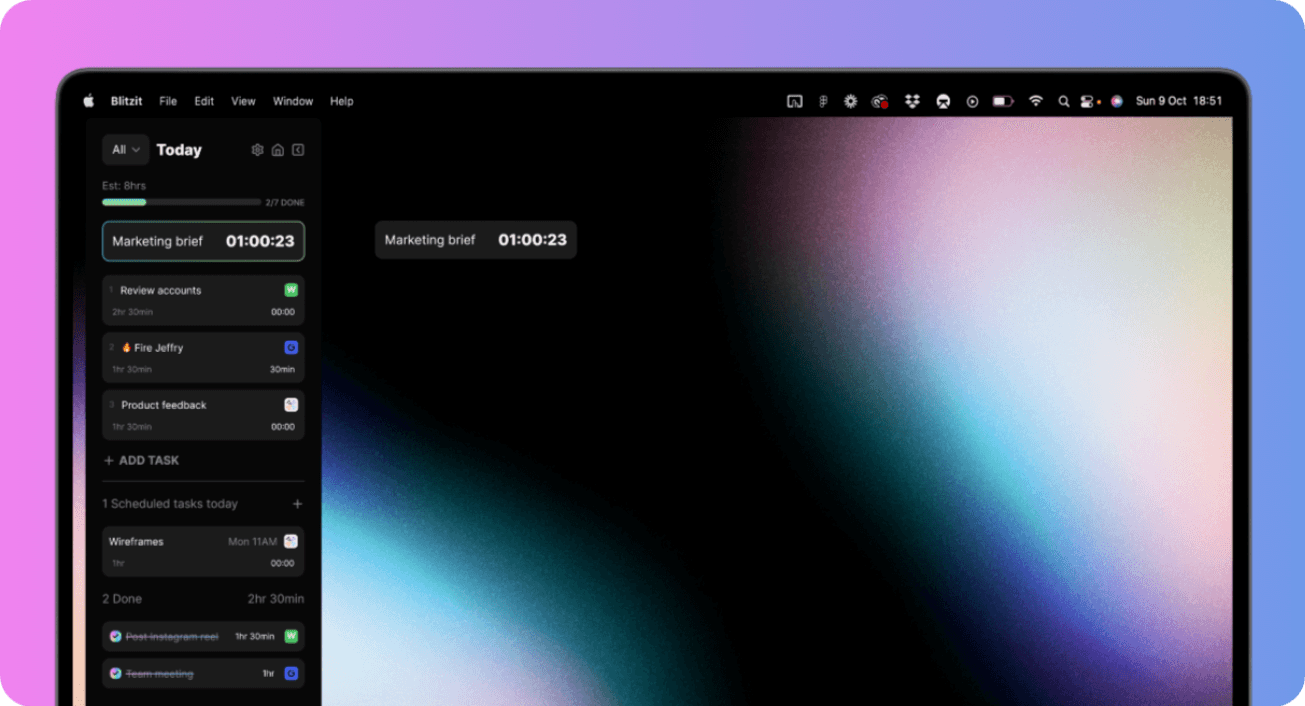
With Pomodoro mode, you can alternate between focused work sessions and scheduled breaks, keeping you sharp without burning out. And because Blitzit tracks your productivity over time, you can see patterns in when and how you work best.

Website blockers add another layer of accountability, removing the option to "just check" distracting sites.
5. Build a Structured Daily Routine
Routine creates rhythm. When you start and end work at consistent times, your brain learns to shift into productivity mode on cue.
Block out your calendar for deep work sessions, batch similar tasks together, and protect your most focused hours for your hardest work. Flexible scheduling is a perk of remote work, but structure is what makes it sustainable.
6. Take Strategic Breaks to Recharge
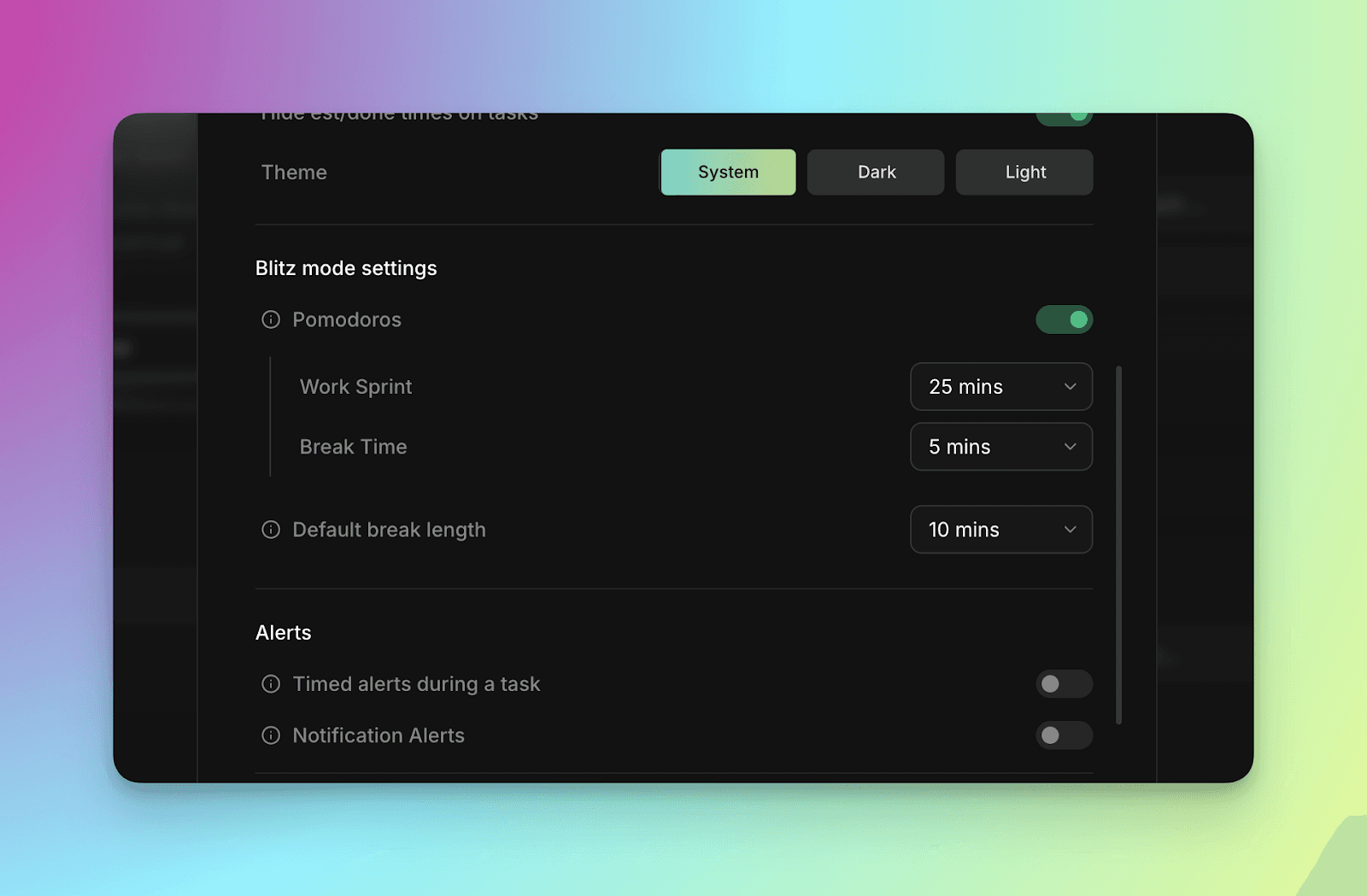
Pushing through without breaks is a recipe for burnout and diminishing returns. The Pomodoro Technique, working in focused sprints (usually 25 minutes) followed by short breaks, keeps your energy levels steady.
Blitzit makes this easy. When you enable Pomodoro mode, the timer automatically transitions from work time to break time with a notification sound. You don't have to remember to stop: the system does it for you.
7. Prioritize Your Mental and Physical Well-Being
Focus isn't just about willpower; it's about capacity. If you're sleep-deprived, stressed, or sedentary, your brain simply won't perform at its best.
Make time for exercise, get enough sleep, and step away from screens when the workday ends. Protecting your mental and physical health is one of the most underrated productivity strategies out there.
Conclusion
Successfully avoiding distractions while working from home isn't about perfect discipline; it's about setting up systems that make focus easier. Design your environment, manage your tech, and build routines that protect your attention.
Remote workers who get this right can gain over four additional hours of focused work every week compared to their office counterparts. That's more than 60 hours a year of reclaimed productivity.
Tools like Blitzit can help you stay on track with prioritized task lists, live countdown timers, and built-in Pomodoro support, so you spend less time fighting distractions and more time finishing what matters. Your focus is worth protecting.
Working from home can feel like freedom, until your couch, phone, and laundry start fighting for your attention. What begins as a productive day can quickly turn into hours lost to scrolling or random chores. The truth is, staying focused outside a traditional office takes more than willpower.
Distractions are part of the deal, but with the right structure, mindset, and tools like Blitzit, you can reclaim control of your day and actually enjoy the perks of remote work. Keep reading to learn how to stay focused, productive, and balanced while working from home.
Why Remote Work Distractions Are So Challenging
Working from home presents a unique paradox. On one hand, you escape the constant tap-on-the-shoulder interruptions of a busy office. On the other hand, your home is filled with temptations that an office simply doesn't have. The fridge. Your bed. That show you've been meaning to binge.
Research shows it takes about 23 minutes to fully regain focus after a single distraction. Even brief interruptions, a quick text, a doorbell ring, can snowball into massive productivity losses over the course of a day.
Digital tools make things even trickier. The same apps that keep you connected to your team also create constant pressure to respond immediately. Studies suggest 60% of remote workers feel pressured to quickly answer messages, and 63% feel they must be available at all times. That "always on" mentality chips away at your ability to do deep, focused work.
The blurred boundaries between living and working spaces don't help either. When your office is also your living room, it's hard to flip the mental switch into "work mode." Your brain struggles to separate relaxation from productivity, leaving you in a perpetual gray zone that drains energy and focus.
Common Work-From-Home Distractions
Before you can fight distractions, you need to know what you're up against. Most remote workers deal with a familiar cast of culprits:
Digital interruptions: Slack notifications, email pings, social media scrolling, and the endless black hole of YouTube or TikTok.
Household interruptions: Kids, pets, roommates, deliveries, and that neighbor who seems to mow the lawn at the worst possible times.
Environmental blur: Without a clear separation between your workspace and personal space, it's easy to drift between tasks and leisure.
Self-imposed distractions: Checking your phone "just for a second," snacking, or convincing yourself that one quick chore won't hurt.
The tricky part is that many of these distractions feel harmless in the moment. But they add up fast. A five-minute Instagram break here, a quick kitchen visit there, suddenly, your afternoon is gone.
How to Avoid Distractions While Working From Home
The strategies below aren't just theory; they're practical moves you can start using today to protect your focus and get more done.
1. Set Up a Dedicated Workspace
Having a designated spot for work, even if it's just a corner of a room, creates a psychological boundary between "work time" and "home time." When you sit down at that space, your brain starts associating it with focus.
Avoid the temptation to work from your bed or couch. It feels cozy, sure, but it tanks your productivity and makes it harder to mentally clock out later.
2. Establish Clear Boundaries With Household Members
If you live with others, communication is everything. Let your family or roommates know your work hours and when you need uninterrupted focus. Setting expectations upfront reduces the "quick question" interruptions that throw off your flow.
A closed door or a pair of headphones can serve as a visual signal that you're in deep work mode.
3. Turn Off Notifications and Limit Social Media
This one's non-negotiable. Disable non-essential notifications on your phone and computer during work hours. Every buzz or banner that pulls your attention costs you way more than the few seconds it takes to glance at it.
Research shows that half of employers now enforce strict measures to limit digital distractions, and there's a reason for that. Consider blocking social media entirely during your focus blocks using browser extensions or app settings.
4. Use Focus Tools and Website Blockers
Sometimes willpower isn't enough. That's where focus tools come in. Blitzit, for example, combines a simple to-do list with a built-in timer that keeps your current task front and center. You prioritize your tasks for the day, hit "Blitz now," and your top task automatically goes into a live countdown timer. The Floating Timer feature sits on top of any application on your screen, so you're constantly reminded of what you should be working on.

With Pomodoro mode, you can alternate between focused work sessions and scheduled breaks, keeping you sharp without burning out. And because Blitzit tracks your productivity over time, you can see patterns in when and how you work best.

Website blockers add another layer of accountability, removing the option to "just check" distracting sites.
5. Build a Structured Daily Routine
Routine creates rhythm. When you start and end work at consistent times, your brain learns to shift into productivity mode on cue.
Block out your calendar for deep work sessions, batch similar tasks together, and protect your most focused hours for your hardest work. Flexible scheduling is a perk of remote work, but structure is what makes it sustainable.
6. Take Strategic Breaks to Recharge
Pushing through without breaks is a recipe for burnout and diminishing returns. The Pomodoro Technique, working in focused sprints (usually 25 minutes) followed by short breaks, keeps your energy levels steady.
Blitzit makes this easy. When you enable Pomodoro mode, the timer automatically transitions from work time to break time with a notification sound. You don't have to remember to stop: the system does it for you.

7. Prioritize Your Mental and Physical Well-Being
Focus isn't just about willpower; it's about capacity. If you're sleep-deprived, stressed, or sedentary, your brain simply won't perform at its best.
Make time for exercise, get enough sleep, and step away from screens when the workday ends. Protecting your mental and physical health is one of the most underrated productivity strategies out there.
Conclusion
Successfully avoiding distractions while working from home isn't about perfect discipline; it's about setting up systems that make focus easier. Design your environment, manage your tech, and build routines that protect your attention.
Remote workers who get this right can gain over four additional hours of focused work every week compared to their office counterparts. That's more than 60 hours a year of reclaimed productivity.
Tools like Blitzit can help you stay on track with prioritized task lists, live countdown timers, and built-in Pomodoro support, so you spend less time fighting distractions and more time finishing what matters. Your focus is worth protecting.
Working from home can feel like freedom, until your couch, phone, and laundry start fighting for your attention. What begins as a productive day can quickly turn into hours lost to scrolling or random chores. The truth is, staying focused outside a traditional office takes more than willpower.
Distractions are part of the deal, but with the right structure, mindset, and tools like Blitzit, you can reclaim control of your day and actually enjoy the perks of remote work. Keep reading to learn how to stay focused, productive, and balanced while working from home.
Why Remote Work Distractions Are So Challenging
Working from home presents a unique paradox. On one hand, you escape the constant tap-on-the-shoulder interruptions of a busy office. On the other hand, your home is filled with temptations that an office simply doesn't have. The fridge. Your bed. That show you've been meaning to binge.
Research shows it takes about 23 minutes to fully regain focus after a single distraction. Even brief interruptions, a quick text, a doorbell ring, can snowball into massive productivity losses over the course of a day.
Digital tools make things even trickier. The same apps that keep you connected to your team also create constant pressure to respond immediately. Studies suggest 60% of remote workers feel pressured to quickly answer messages, and 63% feel they must be available at all times. That "always on" mentality chips away at your ability to do deep, focused work.
The blurred boundaries between living and working spaces don't help either. When your office is also your living room, it's hard to flip the mental switch into "work mode." Your brain struggles to separate relaxation from productivity, leaving you in a perpetual gray zone that drains energy and focus.
Common Work-From-Home Distractions
Before you can fight distractions, you need to know what you're up against. Most remote workers deal with a familiar cast of culprits:
Digital interruptions: Slack notifications, email pings, social media scrolling, and the endless black hole of YouTube or TikTok.
Household interruptions: Kids, pets, roommates, deliveries, and that neighbor who seems to mow the lawn at the worst possible times.
Environmental blur: Without a clear separation between your workspace and personal space, it's easy to drift between tasks and leisure.
Self-imposed distractions: Checking your phone "just for a second," snacking, or convincing yourself that one quick chore won't hurt.
The tricky part is that many of these distractions feel harmless in the moment. But they add up fast. A five-minute Instagram break here, a quick kitchen visit there, suddenly, your afternoon is gone.
How to Avoid Distractions While Working From Home
The strategies below aren't just theory; they're practical moves you can start using today to protect your focus and get more done.
1. Set Up a Dedicated Workspace
Having a designated spot for work, even if it's just a corner of a room, creates a psychological boundary between "work time" and "home time." When you sit down at that space, your brain starts associating it with focus.
Avoid the temptation to work from your bed or couch. It feels cozy, sure, but it tanks your productivity and makes it harder to mentally clock out later.
2. Establish Clear Boundaries With Household Members
If you live with others, communication is everything. Let your family or roommates know your work hours and when you need uninterrupted focus. Setting expectations upfront reduces the "quick question" interruptions that throw off your flow.
A closed door or a pair of headphones can serve as a visual signal that you're in deep work mode.
3. Turn Off Notifications and Limit Social Media
This one's non-negotiable. Disable non-essential notifications on your phone and computer during work hours. Every buzz or banner that pulls your attention costs you way more than the few seconds it takes to glance at it.
Research shows that half of employers now enforce strict measures to limit digital distractions, and there's a reason for that. Consider blocking social media entirely during your focus blocks using browser extensions or app settings.
4. Use Focus Tools and Website Blockers
Sometimes willpower isn't enough. That's where focus tools come in. Blitzit, for example, combines a simple to-do list with a built-in timer that keeps your current task front and center. You prioritize your tasks for the day, hit "Blitz now," and your top task automatically goes into a live countdown timer. The Floating Timer feature sits on top of any application on your screen, so you're constantly reminded of what you should be working on.

With Pomodoro mode, you can alternate between focused work sessions and scheduled breaks, keeping you sharp without burning out. And because Blitzit tracks your productivity over time, you can see patterns in when and how you work best.

Website blockers add another layer of accountability, removing the option to "just check" distracting sites.
5. Build a Structured Daily Routine
Routine creates rhythm. When you start and end work at consistent times, your brain learns to shift into productivity mode on cue.
Block out your calendar for deep work sessions, batch similar tasks together, and protect your most focused hours for your hardest work. Flexible scheduling is a perk of remote work, but structure is what makes it sustainable.
6. Take Strategic Breaks to Recharge
Pushing through without breaks is a recipe for burnout and diminishing returns. The Pomodoro Technique, working in focused sprints (usually 25 minutes) followed by short breaks, keeps your energy levels steady.
Blitzit makes this easy. When you enable Pomodoro mode, the timer automatically transitions from work time to break time with a notification sound. You don't have to remember to stop: the system does it for you.

7. Prioritize Your Mental and Physical Well-Being
Focus isn't just about willpower; it's about capacity. If you're sleep-deprived, stressed, or sedentary, your brain simply won't perform at its best.
Make time for exercise, get enough sleep, and step away from screens when the workday ends. Protecting your mental and physical health is one of the most underrated productivity strategies out there.
Conclusion
Successfully avoiding distractions while working from home isn't about perfect discipline; it's about setting up systems that make focus easier. Design your environment, manage your tech, and build routines that protect your attention.
Remote workers who get this right can gain over four additional hours of focused work every week compared to their office counterparts. That's more than 60 hours a year of reclaimed productivity.
Tools like Blitzit can help you stay on track with prioritized task lists, live countdown timers, and built-in Pomodoro support, so you spend less time fighting distractions and more time finishing what matters. Your focus is worth protecting.